Min vardag, som i ett vacuum,
mellan penseln och duken
Min vardag, ut(tryck)slös,
som att titta på, när färg torkar
© Björn Blomqvist 2026-03-16
Tag: Literature
-
Livet
-
Understanding Creativity: How Art Builds on the Past
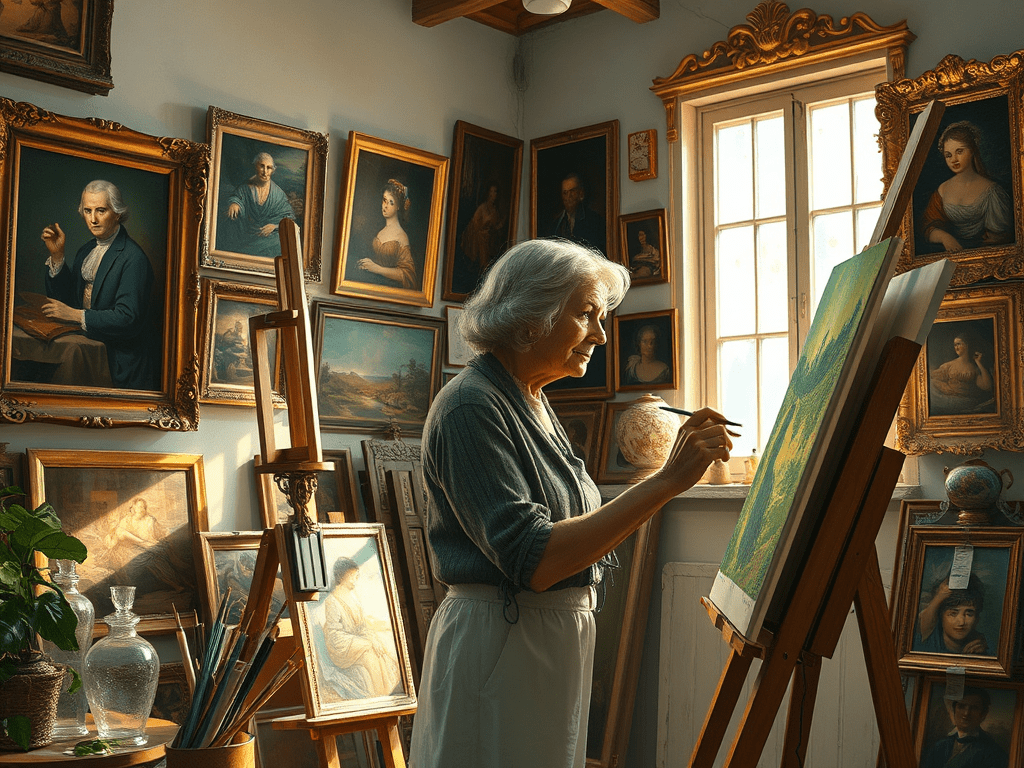
Art draws inspiration from the past while simultaneously striving for innovation. Every artist carries the weight of history within them, yet they yearn to discover their unique style. This delicate balance between heritage and change is where creation truly blossoms. Tradition transforms into material that emerges as something distinct and vibrant.
Something I’ve always wondered about is the phrase: “All art is born from art.” It can be interpreted in different ways. However, for me, it underscores a fundamental truth. This truth is about the cyclical nature of creativity. Just as many great artworks throughout history are built upon earlier ideas, a dialogue continues between different eras. Artworks exhibit various styles, which is similar to the other phrase: “There’s nothing new under the sun.”
Today’s artists draw inspiration from the past by repurposing and reimagining these influences. This creative process allows them to craft something novel and pertinent. This exemplifies the ongoing evolution of art and ideas. Ultimately, it underscores that art is a collective endeavor, with each piece contributing to a larger, ever-developing narrative.
I’m curious about the multifaceted nature of art. There are so many layers of meaning and significance that require in-depth exploration. Where can I find answers to my questions? I’m particularly interested in the origins of contemporary artworks. It’s fascinating to consider how the creative expressions of earlier generations have shaped our current artistic landscape. How have new art styles emerged from the old, driven by a quest for identity and understanding? Who holds the answers to these questions that perplex me? I yearn to uncover the historical insights that can illuminate our understanding of art and its evolution.
On a deeper level, I find myself pondering the intricate distinction between forgery and imitation. This complex question explores the realms of art and ethics. It raises profound questions about the acceptable boundaries of inspiration. It also considers the fine line between resemblance and caricature. The intention behind the creation becomes a pivotal factor in these cases. While a resemblance seeks to pay homage, a caricature often aims to mock or criticize. These subtle nuances can be challenging to define. Yet, they are crucial in shaping our perception. They also impact the valuation of both artistic works and cultural expressions.
The resemblance of a work to earlier works often leads to claims of similarity and inspiration. This phenomenon is not limited to visual arts. It also applies to music and lyrics. Many expressions and themes frequently recur in different versions. For instance, a poem I write may resemble someone else’s without my knowledge. This can sometimes evoke a sense of wonder. Is it merely a coincidence that influences our creations? Or are there common frameworks that draw us towards similar images and emotions? Only we, as creators, can truly know. We navigate a world filled with influences and ideas, constantly seeking our unique expression. Simultaneously, we are aware of how we shape and are shaped by the works that have come before us.
It’s crucial to comprehend an artist’s intent behind their work. This applies irrespective of whether it’s groundbreaking, revolutionary, or a reproduction of earlier creations. Each artwork carries a profound significance and context. Every interpretation is unique and can evoke diverse emotions and thoughts within us.
I, along with other observers, cannot provide precise answers. Our interpretations are shaped by our unique perspectives, experiences, and emotions. This inherent subjectivity makes art a dynamic and personal experience for everyone who engages with it. The artwork becomes a dialogue between the artist and the observer, with both parties contributing to its meaning and significance.
In today’s art world, it’s an intriguing question to ponder. Does the artist possess knowledge of art history? Or are they simply forging their own unique path? Many artists draw inspiration from the past. However, I believe that most have a solid foundation in the traditional art forms. By studying earlier works, they gain insights and techniques that shape their own creations. These references add depth and richness to the art being produced today. They also ensure that it resonates with audiences on a deeper level.
It’s also crucial to not merely replicate the past. Instead, artists must discover a distinctive and original voice in their creations. The artist seeks to express themselves, while simultaneously allowing the viewer to interpret the work freely. This fosters a dialogue between the artwork and the audience. It enables each viewer to experience the art in their own unique way.
The question of forgery is more about provoking than imitating. It’s more about provoking because it often sparks debate and questions the norms of what truly constitutes art. The art that has been created contributes to this, as it’s often provocative and thought-provoking.
An analogy serves several purposes. It can pay tribute to the original work, or it can challenge or provoke the viewer. Something that already exists can always be presented anew. It can be shown from a different perspective. This highlights the diversity of interpretations and ideas that art can evoke over time.
The question at hand revolves around the distinction between analogy and caricature. These two artistic forms are frequently employed to convey diverse messages and evoke various emotions. Caricatures, in particular, can be created in a distinct artistic style. This style diverges from the original. It reflects different cultural or social contexts. They possess an innovative and playful quality, often in a naive manner, making them a unique medium of expression.
Caricatures, a long-standing art form, continue to captivate and challenge viewers. While their techniques are ancient, they are constantly evolving to reflect societal changes and the times.
In art history, where can one witness something entirely novel, something not derived from art itself? Is there a realm where the boundaries blur, giving birth to new ideas from the existing?
The question of whether modern art always originates from earlier art is complex, especially considering the intricacies of art history. While it’s true that modern art often draws inspiration from the past, it’s also important to recognize its multifaceted identity. Modern art has revolutionized the medium by breaking traditional norms and exploring new forms of expression.
Modern artists have studied earlier works and drawn inspiration from various art forms, such as music, literature, and film. This cross-pollination of ideas has sparked a dynamic dialogue. It bridges the past and the present. As a result, new artistic expressions have emerged. Simultaneously, this dialogue maintains a strong connection to the roots of art historical development.
Is it truly evident that all art originates from other forms of art? There exists a captivating cycle of creativity and inspiration that continuously unfolds. Can we assert that a particular artwork has never existed in any other form? In a world where ideas frequently build upon one another, it becomes challenging to completely isolate a single piece.
The most insightful answers to these questions come from the artists themselves. Through their personal experiences and unique perspectives, they can shed light on their creative processes. What drives your purpose in creating? Where does your creative power originate, and what motivates you? What experiences and influences have shaped your artistic journey? Who has impacted you along the way, and how has that shaped your style and expression? Or is your art truly entirely unique and personal, a reflection of your own thoughts and feelings?
Conclusion
The conclusion is that all art originates from earlier art. This doesn’t imply that new art lacks originality. Instead, all creativity draws from old ideas, traditions, and expressions. The artistic process involves a dialogue between the personal and the historical—between imitation, renewal, and interpretation.
Real creation does not come from nothing, but from being aware of what already exists. So, art history is not a burden. Rather, it is a foundation for development. Each artwork shows traces of its predecessors and opens new pathways for the future.
© Björn Blomqvist 2025-10-12
-
Jag och trädet
Nära vägkanten
står jag orörlig
Blöt av stänk,
från ingenstans

Är alldeles stilla
när du tittar upp
Lutar mig fram
i den lätta vinden

På vintern är jag
alldeles naken
På sommaren,
klädd i grönska

Blir torr i munnen
när solen värmer
Huden som kliar
med fågelns vila

Det färgade håret
en klar höstdag
Hår som faller av
när frosten biter i

Nära vägkanten
tronar jag alena
Kronan som dallrar
av yxans kraft…

© Björn Blomqvist 2025-10-04
-
Donald Sassoon and La Gioconda
The book offers an in-depth analysis of the world’s most famous painting. It was created by Leonardo da Vinci, an artist who embodies perfectionism, universality, and realism. With 500 years of art historical theories constantly colliding and converging, Sassoon provides an insightful guided description of La Gioconda. He explores the myth surrounding Monna (Mrs.) Lisa Gherardini. He also discusses Leonardo as a scientist. This further enriches the understanding of the painting’s significance and deepens the insight into its complex context.
First, Donald asks why this particular artwork is so famous. It is indeed strange that in the Grande Galerie at the Louvre, there are works by Rafael, Rembrandt, and Caravaggio. There are also works by Dürer and Vermeer. These artists are renowned for their masterpieces. However, none of them enjoy the same privilege as the Mona Lisa. The Mona Lisa is protected by a special place in a private room. Could Leonardo’s Mona Lisa not hang more openly among the works of all the other great masters?
In the introduction, Donald Sassoon emphasizes the central importance of art theory. He also highlights Giorgio Vasari’s significance for understanding art history and the painting La Gioconda. Art history encompasses not only images and representations but also deeper theoretical and contextual perspectives. I have personally experienced this in my own work. Art theory is fundamental to this discipline. It makes the study of art history more engaging and insightful.
The book explores the mystique surrounding the depiction of the Mona Lisa. It raises thoughts about the extensive research conducted. Many texts have been written about the work. It is interesting to note that not only art theoretical perspectives surround the Mona Lisa. Literary and cultural discussions also span various genres and forms of expression.
The interesting and obvious aspect of this book is its descriptions. It recounts the various consequences related to the theft of the painting in 1911. The book also demonstrates how it was exploited after the event. After the theft, the painting was returned to the Louvre. Humorous and satirical images and stories about what happened emerged. Subsequently, the parodies waned, and instead, many claimed worldwide that they possessed the original.
The forgeries amounted to thousands, and the painting that was returned to the Louvre is also not considered authentic. These consequences are natural scenarios, as almost everyone wishes to possess invaluable treasures. Novels, crime novels, and children’s stories are also being developed that address the theft of the painting. The chapter in the book that describes the history of the theft constitutes one of the most fascinating parts.
At the end of the book, it explores the globalization of painting. It also discusses the life of the Mona Lisa as a pop star. This is a fascinating journey. I have often heard the name Mona Lisa mentioned in many song lyrics. The name is just as well known to the author. He highlights songs by Cole Porter, Elton John, and Carola’s fantastic contribution to the Eurovision Song Contest (1983), among others.
It is clear that the Mona Lisa has become a symbol that adorns advertisements and products. This is something that almost everyone has likely noticed. Many pages in the book are devoted to her influence. Moreover, both Donald and many others recognize this. The Mona Lisa was exhibited in Washington and New York in 1963. I also see that it was not just a cultural event. It happened again in Japan in 1974. It was also a fantastic opportunity to strengthen the political relations between the countries.
The author’s conclusion is clear. He cannot confirm whether it is indeed Lisa Gherardini who has been portrayed. This is based on the limited evidence. He also cannot answer the 19th-century mystery surrounding the enigmatic smile. I will now conclude my meeting, and thus also the post. As Carola says, “Just as Mona Lisa has her smile, so do you hide a secret.”
Björn Blomqvist 2011-03-08
Photo: I took this photograph during my visit to the Louvre.

