In this text, I introduce my art analysis method, which is based on observation and interpretation. The method consists of four steps that help us understand artworks on different levels.
As a word artist, I’m also passionate about analyzing art. From a young age, I’ve always been fascinated by examining the elements of a work of art. Naturally, this interest continued after I earned my degree in art history from university.
I’ve previously discussed my method in comparison to Erwin Panofsky’s. There are many similarities between our approaches. I follow my own path, yet my method remains similar to his. My primary focus is on the overall impact of an art exhibition and individual works.
My method comprises four straightforward steps: How, What, Tell, and Who. These steps represent a significant journey: Observation, Representation, Meaning, and Background.
In the observations section (how), there are evident similarities with Panofsky’s pre-iconographic level. Initially, I focus on the technique and skill employed. Secondly, I consider the color, perspective, and movement, as well as whether the image is linear or painterly. These elements often provide insights into the construction of the artwork and the underlying meaning of its expression. Observation serves as the foundation – to truly see before interpreting.
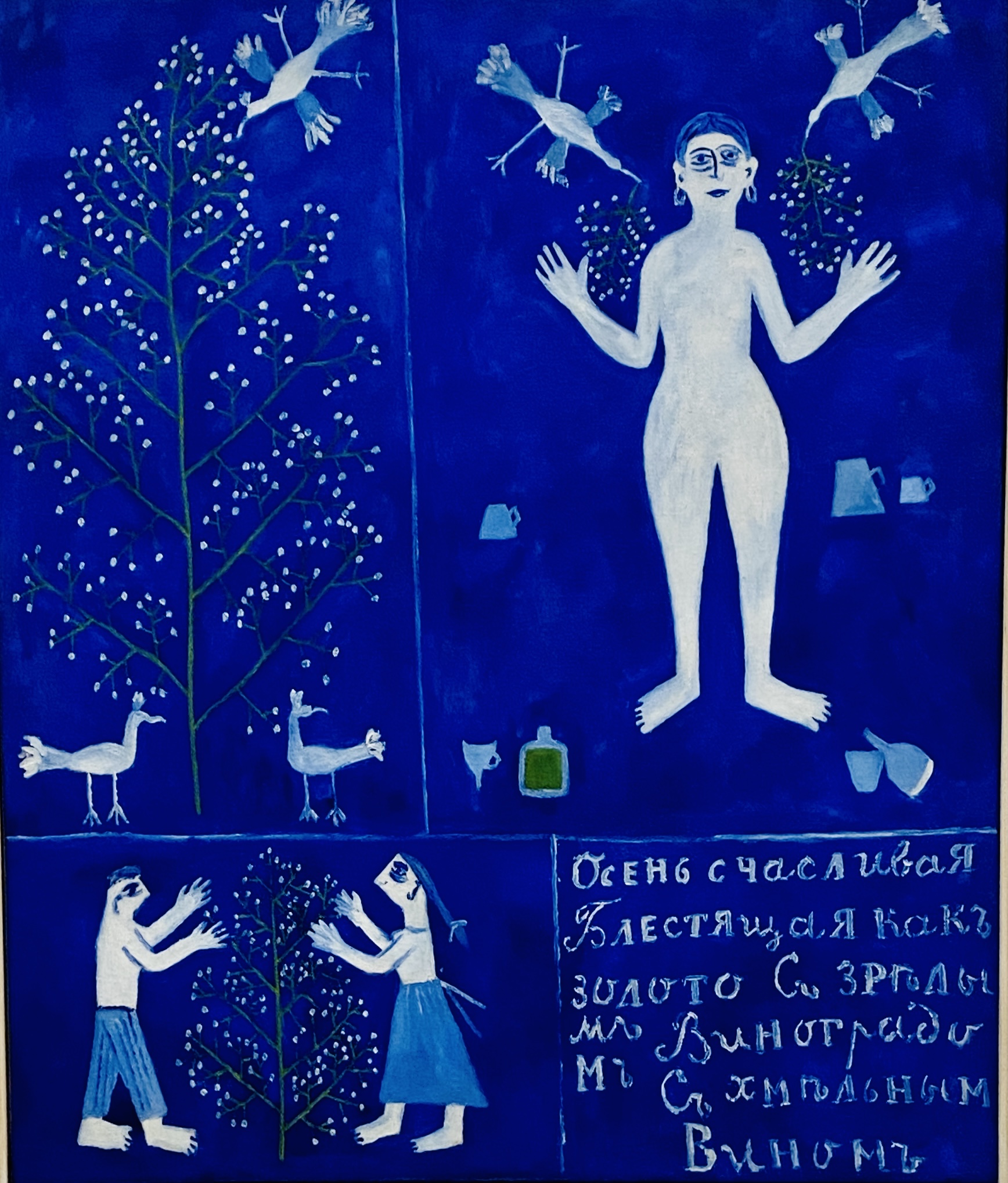
An example of a painting dominated by shades of a particular color uses distinct lines. These lines delineate the boundaries of various figures. These figures, or motifs, appear to hover and are depicted in motion, akin to a car navigating a bustling road. Through careful observation, one can interpret a multitude of elements within the artwork.
Example: Autumn (1912) by Mikhail Larionov at the Centre Pompidou: The bold use of color is striking. The use of blue, in particular, makes representational art stand out. Despite the lack of depth, the image conveys powerful movement through the birds and dynamic figures on the tree. The painterly style is evident in the sharp lines that define the figures’ boundaries.
The representational aspect, as its name suggests, focuses on the subject matter of the artwork. It involves identifying the motifs, figures, and the degree of abstraction present. This step contributes to the overall impression, which is my interpretation of what I perceive in the artwork. While this aligns with Panofsky’s iconographic level, I find the concept of “representational” more intuitive.
A house, for instance, isn’t merely a house on a blank canvas. It can be a specific house with a unique history or a symbolic motif. In such cases, questions often arise rather than definitive answers.
Or…
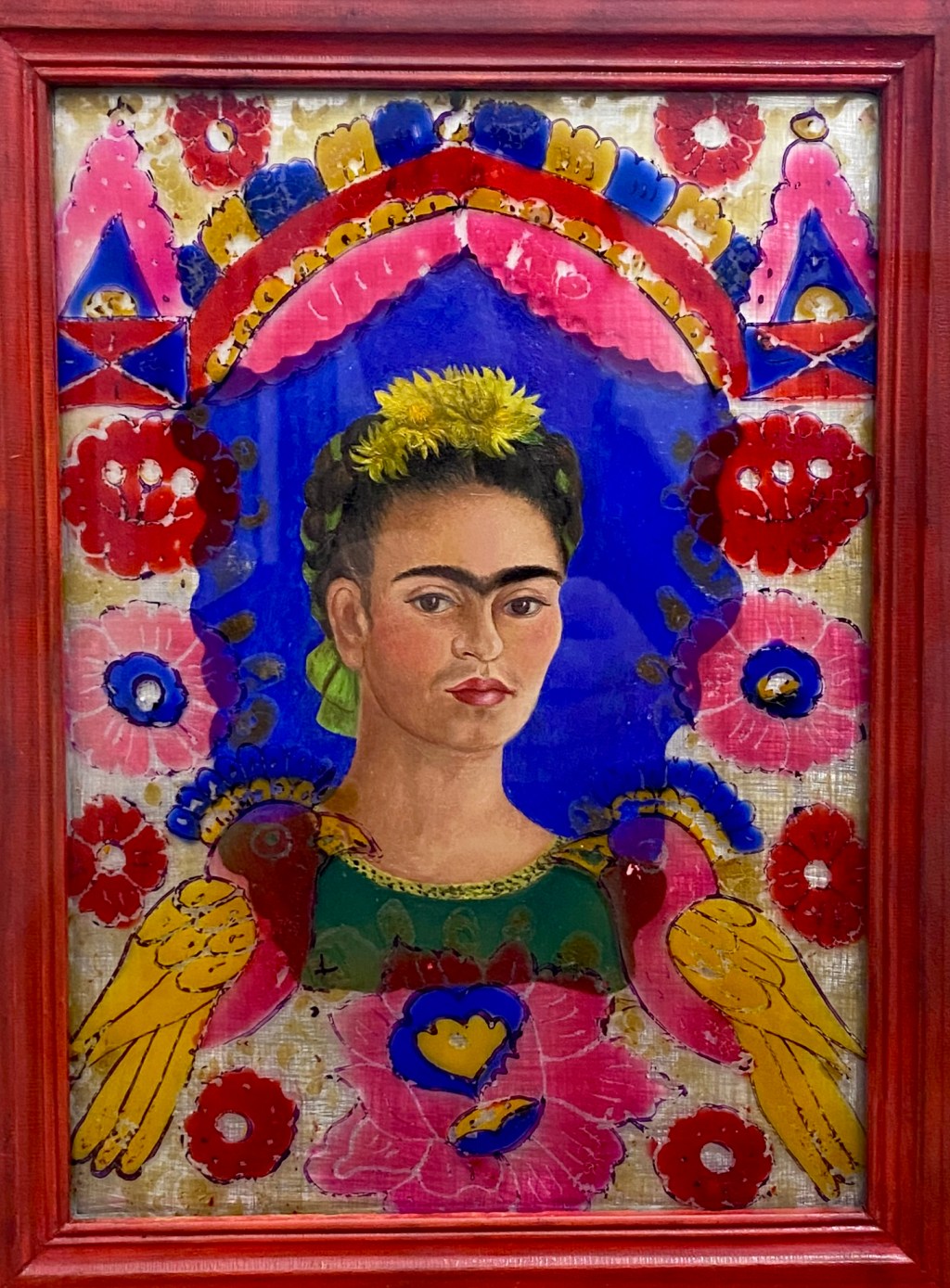
As depicted in the artwork below, this is not just a representation of a woman. It’s a captivating self-portrait of Frida Kahlo, painted with her own hands. Who was she? The answer lies in the rich and layered background section, which awaits discovery and interpretation in the fourth part.

In the “tell” section, I delve deeply into the artwork, which is my favorite part. I search for symbols, the meanings of colors, recurring motifs, and iconic traits. I want to comprehend the artwork’s layers of meaning. Every color, figure, or shape can hold cultural or personal significance. My goal is to uncover the deeper meaning hidden beneath the surface.
Example: The image vividly captures a significant theme that demands our attention. To fully appreciate the grandeur of Baroque art and the mastery of Caravaggio’s work, we must examine its elements. The figures in the painting are both prominent and impactful. The use of light is striking. In Caravaggio’s works, light serves a dual purpose: it illuminates the subjects and symbolizes the divine. It emanates from an unseen source beyond the boundaries of the image.
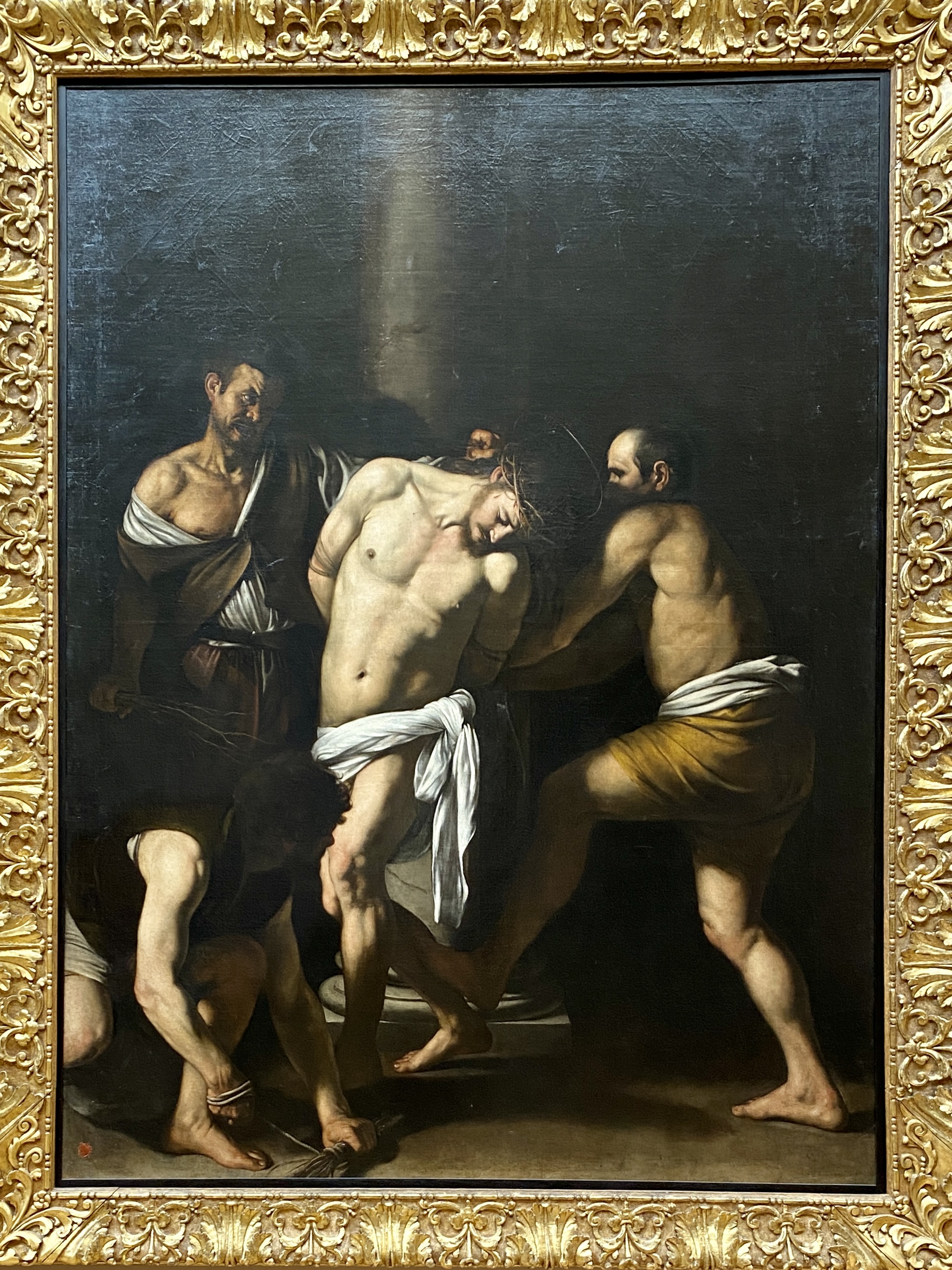
The meaning: the moment when Christ is bound to a pillar and scourged by three executioners. The light — the divine — falls mercilessly upon Christ’s body, almost like a spotlight. The composition is tight. The intensity is physical. All superfluous symbols or background details have been removed. The focus is entirely on the human drama.
The background section is crucial for placing the artwork in context. It delves into the creator’s identity. It explores how the artwork fits into the artist’s broader body of work. It often presents the most challenging aspect of analysis. It is also the most rewarding. This task requires a combination of knowledge and emotional insight to grasp the artist’s intentions, development, and environment.
Ragnar Josephson (1892–1966) was an influential art historian. He offers a valuable perspective on the creation of art in his book, The Birth of the Artwork (1940). Josephson identifies three interconnected aspects of an artist’s creation: psychological, social, and aesthetic. These aspects interact and influence each other throughout the artistic process. Initially, the artist expresses their thoughts and emotions psychologically. These psychological elements are then shaped and influenced by social factors. Finally, the artist emerges as an aesthetic whole, combining these influences to create a cohesive and meaningful artwork. This perspective helps me understand the artist’s intention more deeply. It sheds light on the creative process beyond the final product itself.
Imagine this: you’ve successfully completed steps 1-3 of this artwork. You possess a profound understanding of technique, materials, and knowledge. The vivid hues of blue and yellow immediately captivate your attention. The image exudes remarkable depth and employs a classic central perspective, drawing the motifs together at a focal point. You can almost sense the dynamic movement of the waves and the boats at the quay. There’s so much more to discover and appreciate.

In the next step, it is unequivocally identified as a bay. This captivating evening is when the stars truly shine. This is no ordinary bay; it is a remarkable location along the Rhône River at the end of the 1800s. The view vividly captures the essence of the title, “Starry Night Over the Rhône,” for all who observe it.
The image undoubtedly holds profound meaning and purpose. The darkness effectively represents the time of day, while the bright stars clearly indicate when the scene takes place. While there are additional symbols present, their inclusion adds depth rather than overwhelming the viewer. The colors and motifs are significant elements to consider. In the concluding section, we must acknowledge the extensive documentation of the artist’s life. The biographies provide a wealth of information that enhances our understanding of the artwork.
Summary
By first observing, I establish the foundation: the technical and material elements that form the visible structure of the artwork. Through representation, I discern what is depicted and how—seeking the connection between motif and expression. In the third step, I delve into the symbolic layers that the image conveys. Lastly, the background contextualizes the artwork within the artist’s life and surroundings, situating it within a broader cultural framework.
This approach draws inspiration from Erwin Panofsky’s iconology but embraces intuition and artistic emotions. It aligns with Ragnar Josephson’s triad, which encompasses psychological, social, and aesthetic dimensions. Art emerges from the interplay between internal experiences and the external world.
Ultimately, my approach seeks to unveil the vitality of art. When observation intertwines with insight, the artwork communicates. This fosters a dialogue between the artist and viewer, bridging the gap between history and the present.
© Björn Blomqvist 2025-10-09
 Blomman's Art and Poetry Blog
Comment