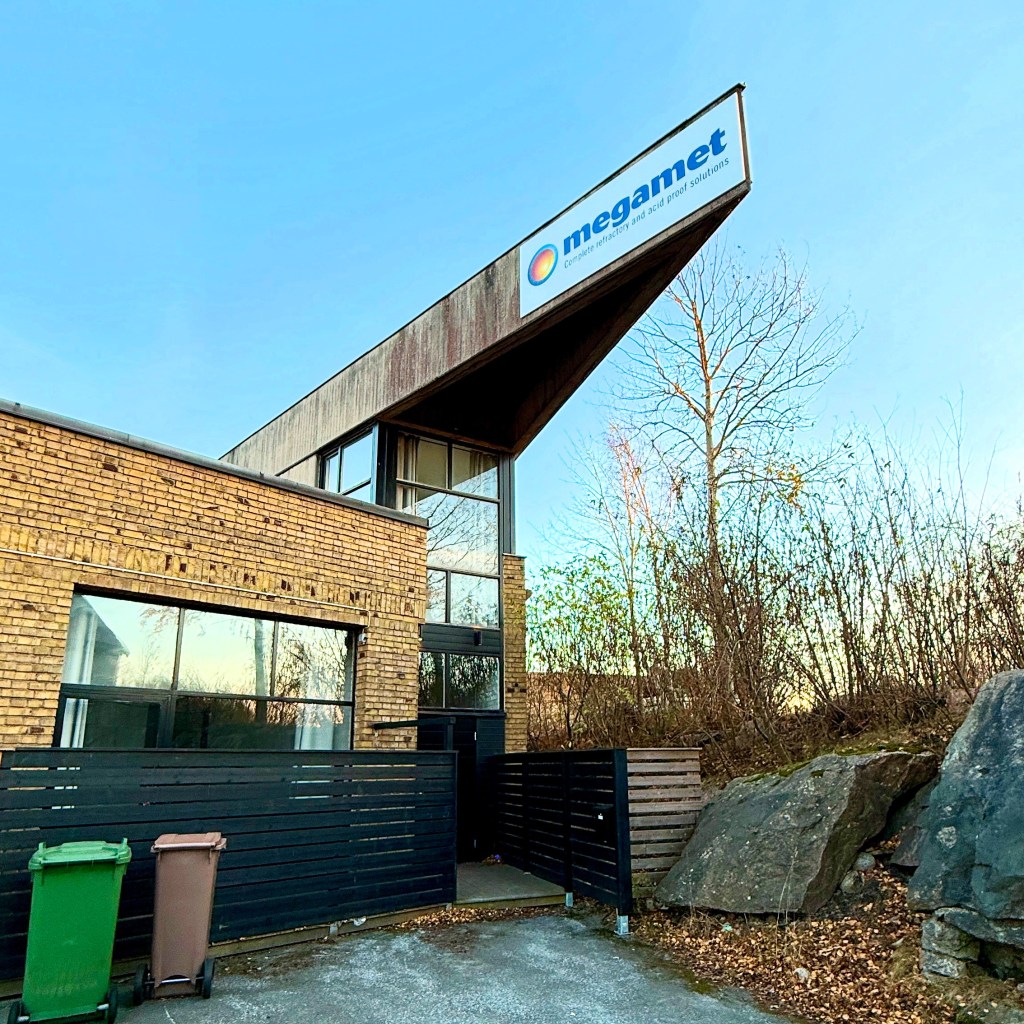
A building can captivate through its character, highlighted by its pointed roof and glass facade that embody modernism and brutalism. Raw concrete highlights the blend of purpose and form. It creates a space to think about time and materials.
There are buildings with conscious architectural design for various reasons; this particular one interests me. It is the part of the building that can be seen in the picture, which I somehow think is spectacular. Not because it is unique. There are probably other buildings that have a similar shape and style. As I say, “Literally, it stands out.”
This building, which I pass by occasionally, has long captured my attention with its fascinating architecture. Modern architecture fascinates me, as it stands out and captures one’s gaze. I can linger in front of such a structure, pondering what it conveys from an architectural perspective
I have to say, from a little distance while looking at it, I don’t think it’s a particularly nice building. In fact, it’s quite the opposite. Still, when I stand in front of the entrance and the protruding roof is above me, I feel modernist vibes. The building also shows a brutalist charm. Personally, I think it resembles a mix of a tweed cap with the earflaps down. It also looks like a shark with a long, pointed forehead.
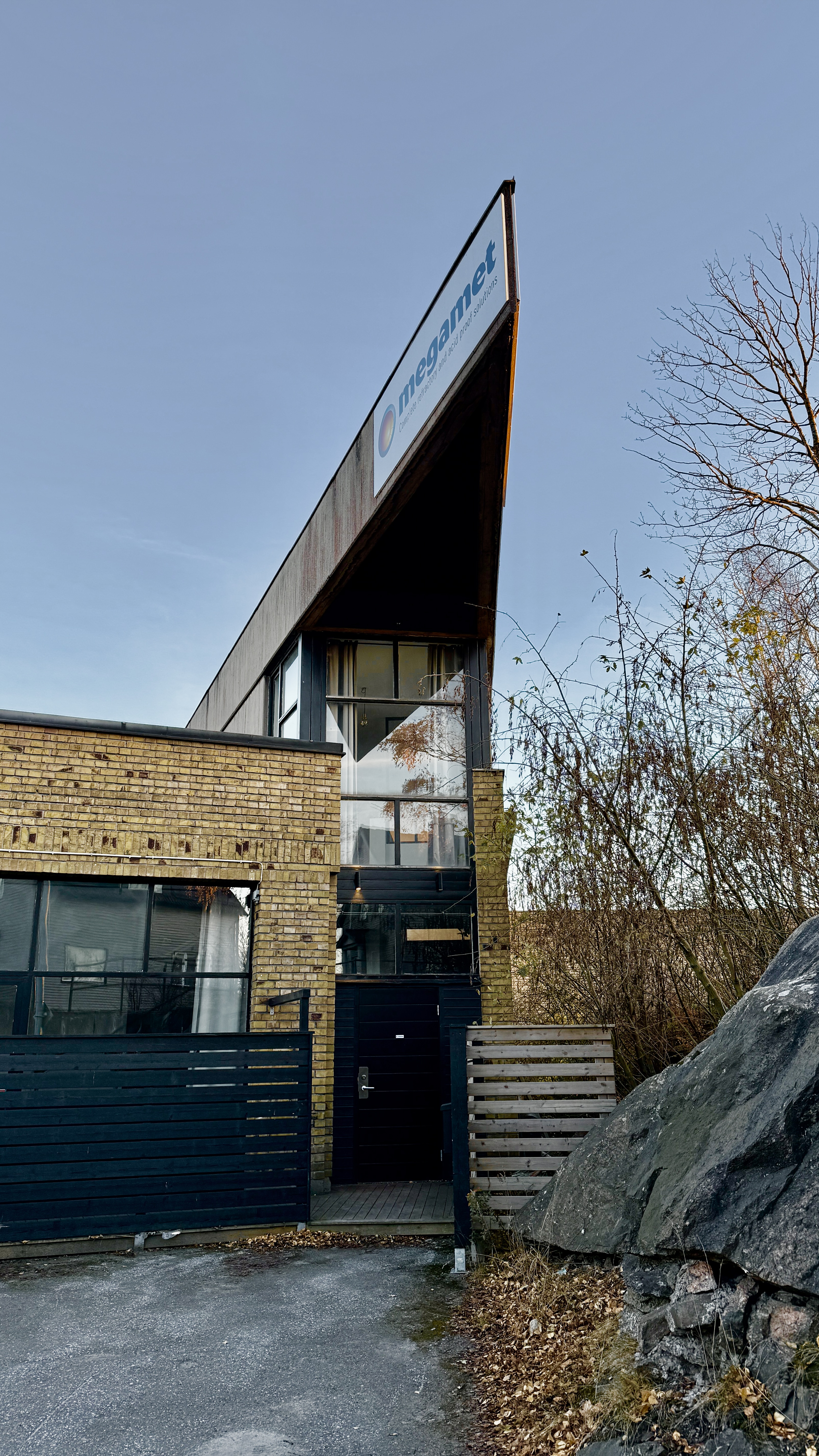
Every time I see it, I am fascinated by the glazed facade and the protruding concrete roof. It is the handicraft house, built in 1964. I haven’t found anything about the history of the house or the architect behind it. What I want to find out is how it relates to the different styles of architecture.
I have spent some time searching in my knowledge bank and in books about architecture in my own library. Analytically, based on the year of construction, material, and form, I would say that it is modernism. The design shows asymmetry in the lower part of the building (left in the picture) compared to other sections. The pointed projecting roof and its uneven shapes resonate with modernist architecture1.
The choice of materials—brick, glass, and concrete—is common in modernist architecture. This creates an industrial feel. It emphasizes minimalism and clean lines without decorative details. These aspects show that the building embodies functionalism, characterized by function, form, process, and industrial design. It caters to people’s needs. The building contains various activities. These include a car workshop, medical center, post terminal, and advertising agency. The building effectively meets the community’s needs. This is a hallmark of functionalism.2
Another style stemming from modernism is Brutalism, characterized by its choice of simple, untreated materials like concrete. This architecture stands outside tradition and conventional aesthetics, achieving effect through raw forms and material honesty. Two central buildings in Brutalism3 are Hunstanton School, Norfolk and La Tourette Abbey, France. (…isms, Understanding Architecture — Jeremy Melvin — Swedish edition 2010.)
I notice similarities between this building and the Norfolk School. The yellow brickwork and large windows in the facade stand out particularly.
My analysis leads to these two architectural styles (within modernism), but of course, there is nothing definite about it. I am looking for the influences. My own fascination with this particular building has led me to analyze and search for meaning and style.
©️ Björn Blomqvist 2024-11-20
- Modernist architecture is the architectural style that dominated the Western world between the 1930s and 1960s. It is characterized by an analytical and functional approach to building design. Buildings in the style are often defined by flat roofs, open floor plans, curtain windows, and minimal ornamentation. (For example, Le Corbusier, Villa Savoye, Poissy, France). ↩︎
- Functionalism is a modernist branch that emerged in the 1920s. Architects focused on building design based on function. This resulted in smooth, undecorated façades with flat roofs and simple geometric shapes. ↩︎
- Brutalist architecture flourished in the 1950s and 1960s. It was driven by a quest for functionality. There was also an emphasis on honesty in the use of materials. It is characterized by raw concrete surfaces, exposed structural elements, and often enormous scales. Brutalism’s charm is covered by a lack of embellishment. ↩︎


Comment